
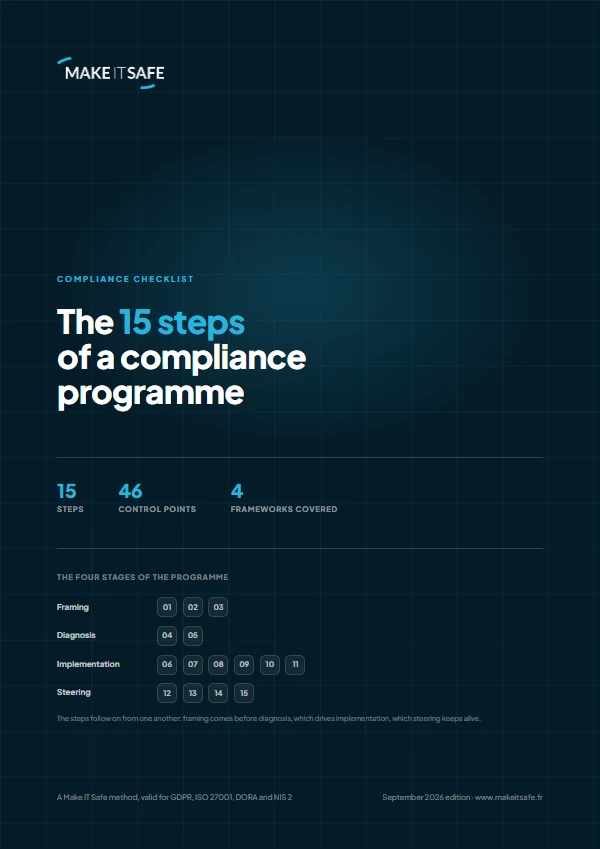
Cybersecurity is a crucial challenge for any modern company. With cyber threats constantly evolving, a cybersecurity audit is an essential tool to protect information systems, ensure regulatory compliance and strengthen resilience against attacks. In this article we provide a complete guide to cybersecurity audits — their objectives, stages, tools and best practices.
What is a cybersecurity audit?
Definition and objectives
A cybersecurity audit is an in-depth evaluation that analyses a company’s security level for protecting information systems and sensitive data. The main goal is to identify vulnerabilities — technical or organisational — to prevent cyberattacks and ensure compliance with regulations such as GDPR, ISO 27001 and the NIS 2 directive.
An audit not only spots security gaps, it also evaluates how effective the existing protection measures are. It gives a clear view of the company’s security posture and recommends ways to strengthen defence against external and internal threats.
Why it is essential for modern companies
As cyberattacks grow more sophisticated, running a cybersecurity audit has become essential — whether to prevent data theft, avoid critical incidents or comply with strict standards. An audit anticipates cyber threats, checks infrastructure robustness and guarantees business continuity when incidents occur.
Companies now face compliance stakes, especially with regulations such as GDPR and ISO 27001. A well-run audit surfaces gaps against those standards and plans the right corrective actions.

The different types of cybersecurity audit
Internal vs external audit
An audit can be run internally by dedicated teams or by an external provider. Internal audits are often performed by in-house cybersecurity specialists; external audits call on independent experts for an objective view.
- Internal audit: useful for regular compliance checks and continuous verification of security processes.
- External audit: often more in-depth and objective, ideal for certifications or regulatory audit preparation.
Regulatory compliance audit
A compliance audit ensures the company meets its legal obligations for data and information security. It checks compliance with standards such as GDPR, ISO 27001, DORA or the NIS 2 directive. A compliance audit not only helps avoid fines but also strengthens customer and partner trust.
Technical vs organisational audit
An audit can also focus on two main angles: technical and organisational.
- Technical audit: evaluates IT infrastructure, network management systems, physical security and software configuration to identify security gaps.
- Organisational audit: analyses security policies, internal processes and risk management to ensure cybersecurity procedures are properly applied at every level.

Key stages of a successful cybersecurity audit
1. Audit preparation
The first step is preparation. Clearly define the audit objectives and the scope to analyse. Good preparation also means collecting every piece of relevant information about the company’s infrastructure, information systems and potential risks.
2. Risk analysis
Once preparation is complete, the audit enters the risk-analysis phase. This evaluates the threats the company is exposed to — external (cyberattacks, intrusions, malware) or internal (human error, security-protocol violations). The goal is to identify the critical vulnerabilities that could compromise security.
3. Tests and system evaluation
Next come technical tests — evaluating systems and networks to detect gaps. This includes penetration testing, software and system configuration audits and security-policy reviews. These tests simulate cyberattacks to test infrastructure resistance.
4. Audit report and recommendations
At the end, a detailed report is produced, listing the vulnerabilities identified and recommendations to fix them. This report is valuable to improve cybersecurity and plan corrective actions.
Tools and methods to run a cybersecurity audit
Automated tools
Modern cybersecurity audits rely on automated tools to analyse systems quickly and efficiently. Vulnerability scanners, code-analysis tools and risk-management software enable in-depth checks while reducing the time and effort required.
Recognised audit methods
Audit methods are often based on international standards. Frameworks such as ISO 27001, COBIT or NIST are key references for structuring audits and ensuring comprehensive assessment. These methods guarantee a security level aligned with current best practices.

What to expect from a cybersecurity audit
Identification of critical gaps
One of the main outcomes is the identification of critical gaps in the company’s infrastructure. These vulnerabilities — technical (misconfigured firewalls) or organisational (lack of staff training) — are detailed in the audit report.
Improved compliance
An audit also verifies compliance with applicable security standards and regulations. Closing the gaps identified strengthens compliance against legal requirements such as GDPR or the NIS 2 directive.
Stronger cybersecurity strategy
Finally, an audit helps improve the overall cybersecurity strategy. By identifying weak points and suggesting concrete solutions, it strengthens system protection, reduces risks and ensures operational continuity.
How much does a cybersecurity audit cost?
Costs vary based on company size, system complexity and audit depth (internal or external). A simple technical audit can cost a few thousand euros; a more complete audit that includes organisational assessment and deep penetration testing can be much more expensive.
ROI of a cybersecurity audit
Despite the upfront cost, a cybersecurity audit is an excellent return on investment. By identifying and fixing vulnerabilities, the company avoids costly incidents, data loss and compliance fines.

A cybersecurity audit is far more than a formality. It is a strategic tool to identify gaps, comply with regulations and strengthen information-system security. To protect your company against constantly evolving threats, running regular audits and implementing expert recommendations is crucial to keep your data safe and your business running.


