
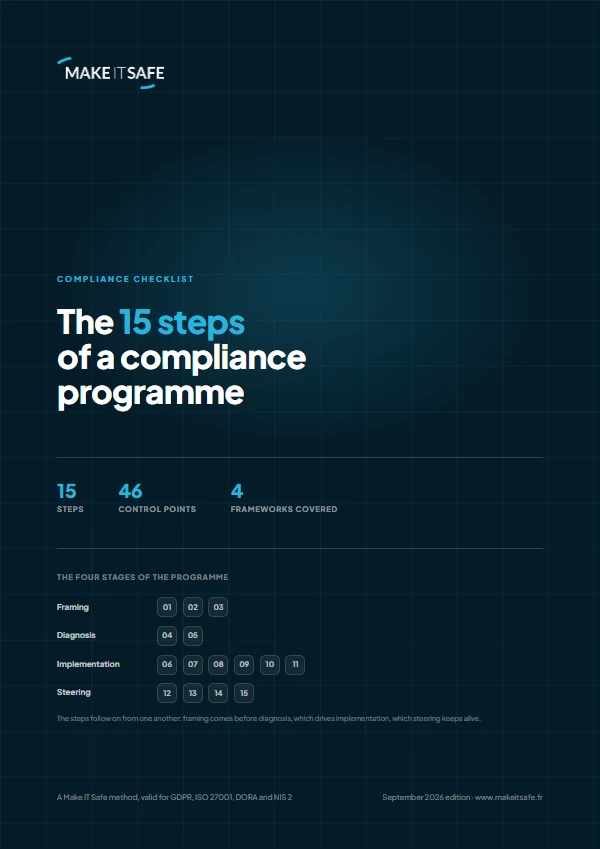
Cybersecurity has become a major stake for every company, regardless of size or sector. With rising threats, a robust, tailored cybersecurity plan is essential. In this article, we walk you through the essential steps to build an effective cybersecurity plan. Whether you are a CISO or an executive, this article provides practical, concrete advice to secure your organisation against digital risks.
Why a cybersecurity plan is essential
Cyberattacks keep multiplying and their impact can be devastating for a company. Poor cybersecurity management can cause financial losses, sensitive-data leaks and reputation damage.
The growing risks of cybercrime
Cybercriminals are getting more sophisticated. In 2023, the number of cyberattacks reported in France exploded, hitting companies of every size. Personal-data theft, ransomware and denial-of-service attacks are all threats weighing on your company. An alarming figure: in 2022, cyberattacks cost more than 1 billion euros to French companies.
Consequences of poor cybersecurity management
The consequences of a cyberattack go far beyond simple data theft. Operational disruption, revenue loss and customer-trust erosion can threaten the very survival of a business. A major incident can also hurt team morale, increase workload and create a permanent crisis climate.
Compliance with regulations (GDPR, NIS 2, ISO 27001, DORA)
Beyond immediate risks, failing to comply with cybersecurity regulations such as GDPR, NIS 2 or ISO 27001 exposes your company to heavy financial penalties. In France, the national cybersecurity agency (ANSSI) plays a crucial role in monitoring and managing security incidents.
The essential components of a cybersecurity plan
A good cybersecurity plan rests on several pillars. Here are the essentials your strategy must cover.
Risk assessment
The first step is to evaluate the risks your organisation is exposed to. This means analysing system vulnerabilities, reviewing access and mapping risks tied to your third parties and suppliers. This step lets you prioritise the actions to protect your data.
Implementing an ISMS (Information Security Management System)
The Information Security Management System is a reference framework for managing security inside an organisation. It structures security policies and ensures consistent risk management. Adopting ISO 27001 standards is a common way to deploy a robust, internationally recognised ISMS.
Incident management and MTTR (Mean Time To Respond)
In case of an incident, response time is paramount. You must react fast to limit damage — that’s the Mean Time To Respond (MTTR). The shorter this time, the less severe the consequences of a cyberattack. Good incident management relies on clear procedures, ready-to-act teams and tools capable of quickly detecting anomalies.
Security in Projects (ISP)
Security in Projects is another key axis. Anticipating risks from the design stage minimises potential gaps. This approach — ISP (Security in Projects) — ensures every digital transformation respects cybersecurity best practices.
Steps to build a solid cybersecurity plan
Building an effective cybersecurity plan requires a structured, methodical approach. It is not just about reacting to an attack — it’s about preventing, detecting, responding and recovering from threats. Here are the key steps.
1. Assess your company’s specific needs
First of all, understand your company’s unique cybersecurity needs. Every organisation has its own characteristics in terms of size, sector and digital infrastructure.
Questions to ask:
- What types of data do you process? Sensitive data (personal, medical, financial) needs stronger protection.
- What are your critical assets? Identify the most important systems and resources.
- What are the potential threats? Each sector faces specific threats: an industrial SME doesn’t face the same risks as a hospital.
The needs assessment also includes vulnerability mapping across your current infrastructure:
- Devices connected to your systems (computers, servers, mobile devices).
- Applications used in the company.
- Internal and external networks (Wi-Fi, VPN).
- Remote access by employees and providers.
A thorough risk-and-vulnerability analysis lets you prioritise actions to protect the most critical assets.
2. Deploy security policies and procedures
Once needs and risks are identified, it is time to formalise cybersecurity policies that govern behaviour inside the organisation. These policies frame system and data use, and raise awareness among employees about best practices.
Essentials to include:
- Password management: rules for creation, complexity and management, including password managers.
- System access: access-control policies that limit access to sensitive data to authorised people only.
- Data encryption: encryption for data in transit and at rest, especially sensitive information.
- Network security: clear rules for Wi-Fi, VPN and other secure communication.
Security policies must come with clear procedures for each potential situation — the procedure to follow when a mobile device with sensitive information is lost, or the way to report a security incident. Procedures must be simple to understand and follow.
3. Incident-response plan and business continuity
A good cybersecurity plan must include a clear, precise incident-response plan. This plan is crucial to react quickly and effectively in case of an attack, to limit damage. It must detail roles and responsibilities and provide a methodological framework to manage the crisis.
Key components:
- Incident identification and notification: what criteria determine an incident? How is the team alerted?
- Initial response: what are the first measures when an incident is detected?
- Crisis-communication plan: who must be informed and when?
- Post-incident analysis: review the event, identify weaknesses and implement corrective actions.
Your plan should also include a Business Continuity Plan (BCP). It guarantees that, even during a major incident, business activity can continue or restart quickly — through data backups, critical-system redundancy and disaster-recovery processes.
4. Continuous monitoring and improvement
A cybersecurity plan should never be static. Threats evolve fast, as do technologies and regulatory requirements. Continuous monitoring is therefore essential to detect anomalies and prevent incidents before they become critical.
Key steps:
- Intrusion Detection Systems (IDS): spot suspicious activity on the network.
- Activity-log monitoring: regular log analysis reveals unusual behaviour or attack signs.
- Regular security tests (pentests): periodic intrusion testing or external audits check system robustness.
- Compliance audits: ensure policies and procedures align with current standards (ISO 27001, GDPR, NIS 2).
Continuous improvement also relies on post-incident reviews. Every gap or attack must be analysed to identify weak points and feed those lessons back into the overall risk-management process.
Tools and solutions to build a cybersecurity plan
A cybersecurity plan requires the right tools.
SaaS cybersecurity management solutions
SaaS solutions like those offered by Make IT Safe let you manage your organisation’s cybersecurity efficiently. They ease third-party analysis, risk management and overall cybersecurity steering through a centralised, collaborative platform.
Security-audit and risk-management tools
Specialised tools help run security audits and identify system vulnerabilities. They are essential to detect gaps before attackers exploit them.
Incident-management and MTTR tracking software
Dedicated software manages security incidents in real time, reducing response time and limiting the impact of cyberattacks. These solutions coordinate actions and optimise MTTR.
Best practices to keep your cybersecurity plan up to date
A cybersecurity plan must evolve as new threats emerge.
The importance of continuous training and awareness
Humans remain the weakest link in cybersecurity. That is why training teams regularly is crucial — awareness sessions, attack simulations (crisis drills) and updates on new threats.
Run regular tests and audits
Penetration tests and audits are essential to verify your plan’s effectiveness. They identify gaps and fix weak points before they are exploited.
Adopt a collaborative approach
Cybersecurity is not just IT’s concern. It must be a collaborative effort involving every stakeholder, including suppliers and external partners. This approach strengthens resilience against threats.
An effective cybersecurity plan is essential to protect your company from cyberattacks. By following the steps in this article, you can build a robust plan adapted to your needs and compliant with regulatory requirements. Don’t wait for an incident — protect your systems, data and people today.


