The growing sophistication of cyberattacks puts cybersecurity compliance at the heart of every company’s priorities. To protect data, meet regulatory obligations and secure systems, companies need solid, adapted solutions. This complete guide helps you understand why compliance is crucial, the main regulations and standards to master (GDPR, DORA, ISO 27001, NIS 2) and how to steer an effective cybersecurity strategy.
To support this effort, see what GRC software does and how to choose the right one.
Why cybersecurity compliance is crucial today
A rapidly evolving regulatory landscape
With constantly evolving cyber threats and regulations, maintaining a high IT-security level is essential. Regulations such as GDPR (General Data Protection Regulation), the DORA regulation (Digital Operational Resilience Act) and the NIS 2 directive, together with the ISO 27001 standard, have become unavoidable pillars of risk and compliance management.
These texts aim to:
- Protect personal data (GDPR).
- Ensure digital resilience in finance (DORA).
- Guarantee information-system security (ISO 27001).
- Secure essential and important entities (NIS 2).
The risks of non-compliance
The consequences of non-compliance can be serious. Beyond endangering data confidentiality and integrity, companies face heavy fines — GDPR penalties can reach up to 4% of global annual turnover.
Impacts include:
- Financial penalties.
- Reputation damage.
- Operational disruption from cyberattacks.
- Data breaches leading to additional recovery and security costs.
By embedding compliance into their cybersecurity strategy, organisations better protect themselves while meeting legal requirements.

Key regulations and standards to master: GDPR, DORA, ISO 27001 and NIS 2
GDPR: protecting personal data
GDPR, applicable since 2018, requires every company operating in the European Union to guarantee personal-data protection. It has transformed how organisations collect, process and store data.
Main obligations:
- Maintain a record of processing activities.
- Base each processing activity on one of the six legal bases of Article 6 (consent is one of them; it must be explicit only in specific cases, such as sensitive data).
- Implement technical and organisational security measures (encryption, pseudonymisation).
- Notify breaches within 72 hours.
DORA: digital operational resilience regulation
The DORA regulation, designed for the financial sector, focuses on digital system resilience in the face of cyber threats. It requires banks, insurers and other financial institutions to deploy security-management systems to protect against cyberattacks.
DORA requirements include:
- Evaluating digital risks.
- Regularly testing the resilience of critical systems.
- Implementing emergency plans for major incidents.
ISO 27001: information-security management standard
ISO 27001 is an international standard specifying requirements for an Information Security Management System (ISMS). It lets companies structure and improve risk-management and sensitive-information protection practices.
Benefits:
- Systematic security-risk management.
- Continuous improvement of security processes.
- Greater customer and partner trust through a recognised certification.
NIS 2: securing essential and important entities
The NIS 2 directive (Network and Information Security) was adopted to strengthen network and information-system security in the European Union. It applies to essential and important entities, classified by sector (energy, transport, health, water, digital, etc.) and by size.
Affected companies must:
- Identify and evaluate cybersecurity risks.
- Deploy appropriate technical and organisational measures to protect critical systems.
- Report cybersecurity incidents to competent authorities.

How to steer your cybersecurity compliance strategy effectively
Use a SaaS solution to simplify compliance
SaaS (Software as a Service) solutions dedicated to cybersecurity and compliance offer significant benefits for companies that want to centralise and simplify managing their regulatory obligations. These tools let CISOs and DPOs effectively steer their compliance strategy.
SaaS benefits:
- Centralisation of security audits, risk management and action plans.
- Real-time tracking of compliance and security indicators.
- Automation of compliance processes for GDPR, DORA, ISO 27001 and NIS 2.
- Easier collaboration between business teams and external stakeholders.
Risk management and security audits
To maintain sustainable compliance, proactive risk management is essential. This includes regular audits to identify vulnerabilities, evaluate threats and adjust security policies accordingly.
Audits should cover:
- IT infrastructure.
- Data-management processes.
- Current security policies.
A SaaS solution can automate these audits and provide dashboards to track how risks evolve.
Steer cybersecurity at group level
Large companies often need to coordinate multiple entities within a group. A holistic view of cybersecurity across the group is crucial. A collaborative tool lets you:
- Coordinate compliance and security actions globally.
- Centralise information and reports.
- Track actions across entities.

Tools to maintain cybersecurity compliance
Audit and risk-management tools
Specialised risk-management and audit tools make companies more efficient. They can:
- Run automatic IT-infrastructure analysis.
- Identify potential vulnerabilities.
- Prioritise corrective actions based on risk.
Tracking and documentation tools
Documentation and corrective-action tracking are crucial to demonstrate compliance. Good practice: use tools that automate:
- Breach and security-incident follow-up.
- Compliance-report generation.
- Documentation of risk-response processes.
Dashboards and reports for leadership
CISOs and DPOs must give visibility to executives. Clear dashboards and periodic reports are essential to:
- Track compliance and cybersecurity KPIs.
- Show progress on security and risk management.
Key players in cybersecurity compliance
The CISO’s role
The CISO plays a central role in security and compliance management. They are responsible for:
- Defining security policies.
- Managing compliance audits.
- Setting up incident-management plans.
The DPO (Data Protection Officer)
The DPO ensures the organisation complies with GDPR. They:
- Monitor GDPR compliance of personal-data processing.
- Advise the company on data-protection best practices.
- Collaborate with the CNIL and other competent authorities.

Involving business teams in compliance
Cybersecurity is not just IT’s concern. HR, marketing, finance and other departments must be aware of security stakes. A SaaS solution lets you:
- Ease collaboration between business and security teams.
- Centralise information for better communication.
Collaborating with external experts
Cybersecurity consultants and auditors bring complementary expertise. They help identify undetected gaps and improve the company’s overall security strategy.
Best practices to maintain cybersecurity compliance over time
Deploy a Supplier Security Assurance plan (SSA)
The Supplier Security Assurance plan (SSA) is the contractual document in which a provider describes the security measures it applies on behalf of its client, and commits to maintaining them. Requiring an SSA from your providers lets you:
- Know the security measures applied to the service.
- Check that they cover your security requirements.
- Monitor their implementation over time.
Collaboration between business and cybersecurity teams
For a company to stay compliant over time, cybersecurity must be embedded in the organisational culture. That requires active collaboration:
- HR to raise employee awareness.
- Marketing to manage customer data securely.
- Finance to comply with sector regulations.

To ensure cybersecurity compliance and meet GDPR, DORA, ISO 27001 and NIS 2 requirements, you need effective tools and a well-thought-out strategy.
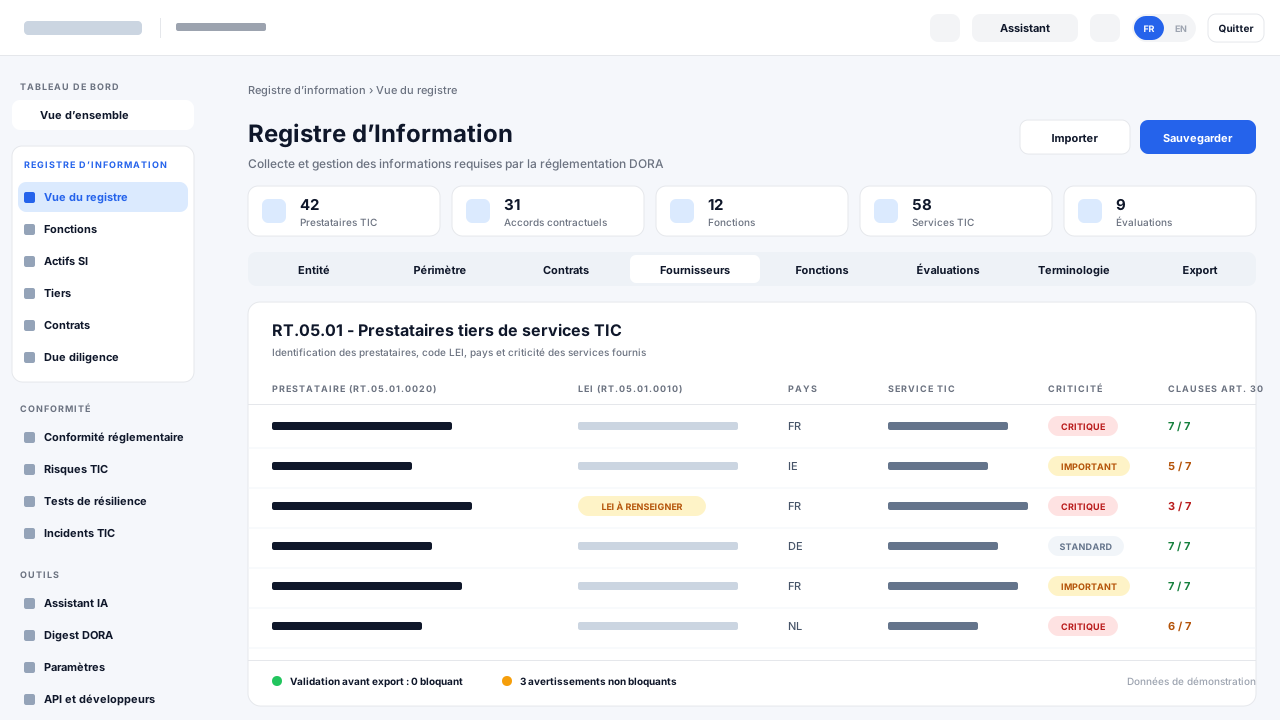
The Make IT Safe platform brings these frameworks together in one tool: risks, audits and action plans are tracked in the same place, whatever the source text. To see how a requirement shared by several frameworks is handled once, request a demo.
FAQ on cybersecurity compliance
Why is cybersecurity compliance so important?
Compliance protects company data, meets applicable laws and minimises cyberattack risks.
What are the main cybersecurity regulations and standards my company must comply with?
The main regulations are GDPR, DORA and NIS 2, plus the voluntary ISO 27001 standard, each with specific requirements for data and information-system security.
How can a SaaS solution help with GDPR, DORA and ISO 27001 compliance?
A SaaS solution centralises risk, audit and action-plan management while automating compliance-indicator tracking.
What are the risks of non-compliance?
Companies face fines, reputation damage, operational disruption and additional costs tied to security incidents.