Digital risk management and regulatory compliance are now major stakes for companies, especially in the financial sector. The DORA regulation (Digital Operational Resilience Act), adopted by the European Union, aims to strengthen the digital operational resilience of financial entities. Facing this requirement, suitable software can prove essential to master these challenges. This article guides you through the process of selecting the best compliance software for DORA requirements, while ensuring optimal cybersecurity.
What is the DORA regulation?
The DORA regulation (Digital Operational Resilience Act) is a European Union legislative response to growing cybersecurity and operational resilience challenges in the financial sector. With the increase in cyber threats, cyberattacks and digital disruptions, this legislation aims to ensure that European financial companies are ready to react quickly and effectively to technology disruptions.
Definition and objectives of DORA
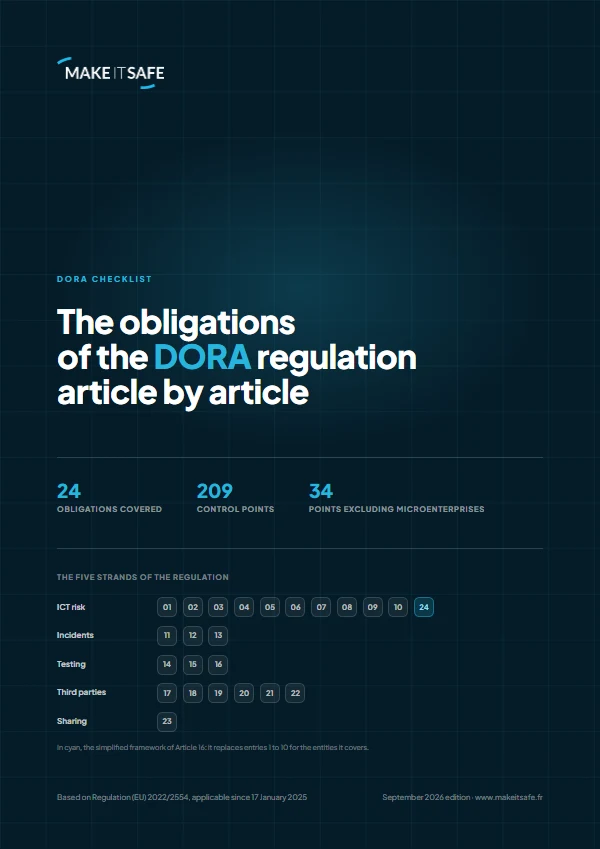
Proposed by the European Commission in 2020, adopted by the European Parliament and the Council at the end of 2022 and applicable since 17 January 2025, DORA requires EU financial companies to take concrete action to strengthen their digital resilience. This legislation focuses on:
- Risk analysis tied to information and communication technologies (ICT)
- Incident monitoring and cyber-threat management
- Setting up continuity plans to deal with technology failures or major incidents
DORA’s ultimate goal is to ensure financial companies can keep operating effectively during technology incidents while maintaining financial stability and protecting customers’ sensitive data.
Why DORA compliance is crucial for CISOs and DPOs
For CISOs and DPOs, DORA compliance is essential. It lets you:
- Protect the company against ICT risks and ensure operational continuity
- Meet competent authorities’ requirements for incident reporting
- Ensure continuous monitoring of ICT service providers, often outsourced
- Centralise cyber-risk management and ease collaboration between internal teams and providers
In short, complying with DORA means both protecting the organisation against cyber threats and guaranteeing business continuity during major disruptions.

What are the key criteria to choose DORA compliance software?
Selecting the right software is crucial to manage risk effectively and strengthen cybersecurity. Essential criteria:
Cyber risk-management features
The software must offer advanced tools to evaluate, monitor and manage risks tied to ICT. Expected features include:
- Digital risk mapping to identify and classify cyber threats
- Proactive vulnerability management with real-time analysis tools
- Continuous monitoring of data flows and ICT suppliers
- Generation of reports and metrics to measure security performance

Ability to automate compliance processes
Good DORA compliance software must offer high automation. The goal is to simplify complex tasks while guaranteeing compliance processes are performed accurately and effectively. Essential features:
- Automated compliance audits and reports
- Automatic generation of dashboards for real-time risk tracking
- Continuous update of performance indicators to measure DORA compliance
Automation saves time while reducing human error — crucial for cybersecurity and risk-management teams.
Integration with other regulatory frameworks (GDPR, ISO 27001)
The software must not only focus on DORA but also handle other frameworks such as GDPR and ISO 27001. An integrated solution lets you:
- Centralise management of different regulatory requirements
- Avoid duplicate efforts and redundant processes
- Harmonise compliance processes across multiple frameworks, guaranteeing continuous compliance with all relevant regulations
This integration capability is especially useful for financial entities that must comply with multiple legal frameworks simultaneously.
Collaboration and stakeholder management
DORA compliance involves coordinating many internal teams and external providers. Effective software must include collaboration tools:
- Shared workspaces to collaborate on security projects
- Action and responsibility tracking per stakeholder, with real-time notifications
- ICT service provider management tools, ensuring they meet the company’s security requirements
Collaborative management provides full visibility on each party’s responsibilities and strengthens the effectiveness of compliance processes.

The benefits of DORA compliance software for your organisation
Adopting DORA compliance software brings many benefits beyond simply meeting legal obligations. It improves both risk management and cybersecurity while delivering significant operational benefits.
Reduced non-compliance risks
A key benefit is the reduced risk tied to non-compliance. Automated compliance software lets you:
- Continuously monitor compliance with DORA and other frameworks
- Avoid human errors through automation of critical processes
- React quickly to regulatory changes or incidents by automatically updating security protocols
This guarantees your organisation stays compliant at all times and can respond quickly to audits or regulator requests.
Time savings and resource optimisation
Manual compliance and risk management can be time-consuming and mobilise significant resources. Compliance software lets you:
- Automate repetitive tasks such as report generation or indicator updates
- Free up cybersecurity and compliance teams to focus on higher value-added work
- Optimise allocation of internal resources, reducing compliance-management costs
By centralising all data and processes in one platform, risk-management teams work more efficiently and boost productivity.
Greater visibility for leadership
DORA compliance software provides better visibility on your organisation’s cybersecurity performance. With personalised dashboards and automated reports, you can:
- Provide leadership with KPIs to track compliance and digital risks
- Let leadership make informed decisions on security strategy and operational resilience
- Ensure smooth communication between technical teams and decision-makers, translating technical data into actionable insights
This transparency strengthens cybersecurity governance and demonstrates to competent authorities that the company takes ICT risk management seriously.

Conclusion
DORA requires EU financial companies to comply with strict standards for cybersecurity and operational resilience. Choosing the right compliance software is essential to effectively manage ICT risks and guarantee business continuity during disruptions.
By opting for a fit-for-purpose solution, you can:
- Automate compliance and incident-management processes
- Centralise risk and ICT-provider management
- Optimise collaboration between internal and external teams
- Deliver greater visibility to leadership on compliance status and ongoing actions
Whether you choose a European solution for perfect alignment with European standards, or opt for an international platform, it is crucial to ensure your risk-management tool meets all DORA requirements.
In conclusion, good compliance software doesn’t just ease regulatory compliance — it also improves your organisation’s overall cybersecurity and strengthens its resilience against digital threats. Investing in a high-performance solution is a strategic move with long-term positive outcomes for your business and its operational stability.
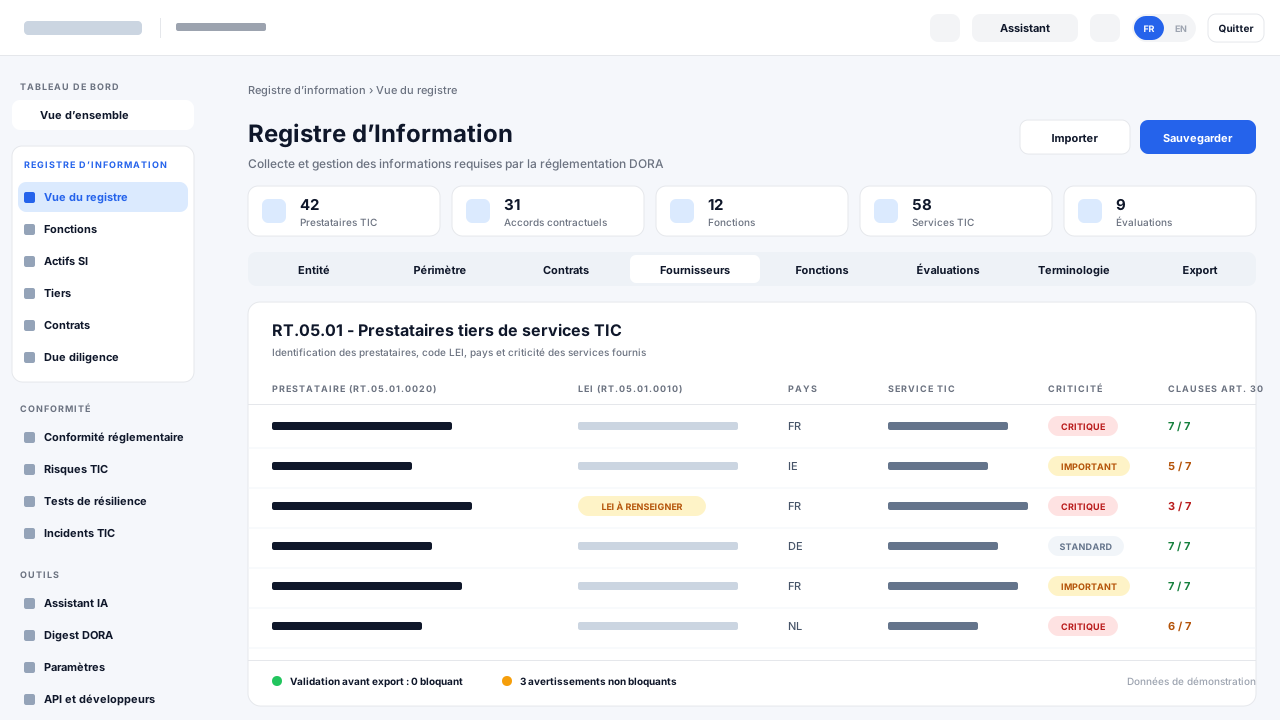
In practice, Make IT Safe brings these capabilities together in one sovereign solution: ICT risk management, third-party monitoring and DORA compliance steering within a single collaborative tool. To see how these capabilities fit together around the regulation’s requirements, visit the Make IT Safe DORA Toolkit page.
FAQ on DORA compliance software
What is DORA compliance software?
DORA compliance software is a platform designed to help companies meet Digital Operational Resilience Act requirements. It centralises ICT risk management, monitors security incidents and ensures compliance with cybersecurity and operational resilience frameworks.
How long does it take to deploy DORA compliance software?
The time needed depends on organisation size and internal process complexity. Generally, it can take from a few weeks to several months for a full integration including team training and monitoring-tool configuration.
What are the costs of DORA compliance software?
Costs vary based on features offered and the company’s specific needs. SaaS solutions are generally proposed as subscriptions, with pricing adjusted to the number of users, selected options and company size.